
Why Ikebana is More Than Just Flower Arrangement
When people think of flower arrangement, they often imagine colorful bouquets or elaborate centerpieces. However, Ikebana (生け花・いけばな), the traditional Japanese art of floral arrangement, is much more than that. Ikebana is a philosophy, a discipline, and an expression of harmony between nature and humanity.
Unlike Western floral arrangements, which often focus on volume and symmetry, Ikebana emphasizes:
- Minimalism (少ない美・すくないび・Sukunai-bi) – Beauty in simplicity
- Asymmetry (非対称・ひたいしょう・Hitai-shou) – Natural, imperfect balance
- Harmony (調和・ちょうわ・Chōwa) – A connection between flowers, space, and the arranger
In this guide, we’ll explore:
The history and evolution of Ikebana
Key principles and techniques behind its unique aesthetics
Essential vocabulary to describe and discuss Ikebana
The main schools of Ikebana and their styles
A study challenge to deepen your appreciation
The History and Evolution of Ikebana
Ikebana, meaning “giving life to flowers”, has been practiced in Japan for over 600 years. It evolved from Buddhist rituals into a respected art form.
A Timeline of Ikebana’s Evolution
- 6th Century – Ikebana originates as offering flowers to Buddhist altars.
- 15th Century – The first structured form of Ikebana, Rikka (立花・りっか), emerges, reflecting nature’s grandeur.
- 16th Century – The Shōin style introduces Chabana (茶花・ちゃばな), a simpler form for tea ceremonies.
- 18th-19th Century – More casual, natural styles like Nageire (投げ入れ・なげいれ) and Shōka (生花・しょうか) become popular.
- Modern-Day Ikebana – Various schools embrace creative, free-style arrangements while keeping traditional techniques alive.
Did you know?
Ikebana was traditionally practiced only by Buddhist monks and samurai. Today, it is a popular art form enjoyed by people worldwide!
The Key Principles of Ikebana
Ikebana is deeply influenced by Japanese aesthetics and Zen philosophy. Here are its core principles:
1. The Rule of Three (三角構成・さんかくこうせい)
Ikebana arrangements often use three main elements, representing heaven (天・てん), earth (地・ち), and humanity (人・じん).
- Ten (Heaven): The tallest stem, representing aspirations
- Chi (Earth): The lowest element, symbolizing stability
- Jin (Humanity): The middle element, balancing both
2. Space and Asymmetry (空間・くうかん & 非対称・ひたいしょう)
Ikebana embraces negative space—what is not arranged is just as important as what is. Unlike Western floral design, it often features asymmetry to reflect the natural world’s beauty.
3. Natural Materials and Seasonal Awareness
Ikebana emphasizes the use of seasonal flowers, branches, and leaves, aligning with wabi-sabi (侘寂・わびさび), the beauty of imperfection.
Example:
In spring, arrangements may feature plum blossoms (梅・うめ・Ume), while autumn may highlight maple leaves (紅葉・もみじ・Momiji).
Essential Ikebana Vocabulary
| Kanji | Hiragana | Romaji | Meaning |
|---|---|---|---|
| 生け花 | いけばな | Ikebana | The art of Japanese flower arrangement |
| 花材 | かざい | Kazai | Floral materials (flowers, branches, leaves) |
| 花器 | かき | Kaki | The vase or container used |
| 剣山 | けんざん | Kenzan | Needle holder to fix stems in place |
| 水盤 | すいばん | Suiban | Shallow container used in arrangements |
| 枝 | えだ | Eda | Branch |
| 葉 | は | Ha | Leaf |
| 茎 | くき | Kuki | Stem |
The Three Main Schools of Ikebana
Different Ikebana schools (流派・りゅうは・Ryūha) have distinct styles:
1. Ikenobō (池坊・いけのぼう) – The Oldest & Most Traditional
- Founded: 15th century
- Style: Formal, structured, follows the Rule of Three
- Example Arrangement: Rikka (立花・りっか) – Tall, grand displays
2. Sōgetsu (草月・そうげつ) – Modern and Free-Style
- Founded: 20th century
- Style: Encourages creativity, can use non-traditional materials
- Example Arrangement: Abstract, artistic forms
3. Ohara (小原・おはら) – Naturalistic and Scenic
- Founded: 19th century
- Style: Focuses on natural landscapes
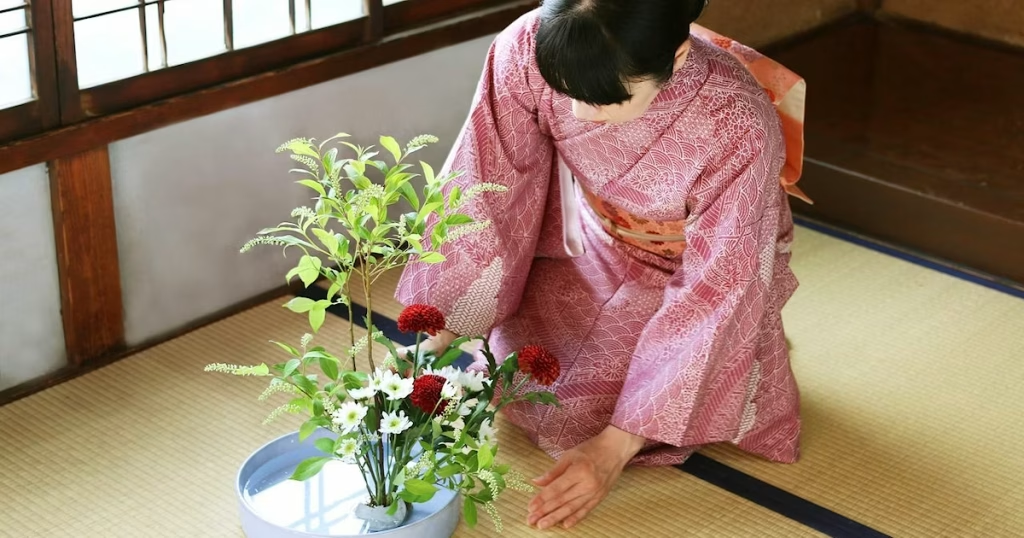
- Example Arrangement: Moribana (盛花・もりばな) – Low, wide arrangements in shallow containers
Which style suits you best? If you love tradition, try Ikenobō. If you prefer modern expression, explore Sōgetsu!
Try Ikebana Yourself!
Challenge 1: Visit a Japanese Ikebana exhibit or watch a demonstration online.
Challenge 2: Try arranging flowers in Ikebana style using a vase and three elements.
Challenge 3: Write a short description of an Ikebana arrangement in Japanese!
Example:
「この生け花は秋のテーマです。紅葉と菊を使って、自然の美しさを表現しました。」
(このいけばなはあきのテーマです。こうようときくをつかって、しぜんのうつくしさをひょうげんしました。)
→ “This Ikebana represents autumn. I used maple leaves and chrysanthemums to express the beauty of nature.”
Experience the Beauty of Ikebana
Ikebana is more than arranging flowers—it’s a meditation, a cultural expression, and a way to connect with nature. By learning its principles and vocabulary, you’ll deepen your understanding of Japanese aesthetics.
What to do next:
- Learn more Japanese cultural arts like calligraphy (書道・しょどう)
- Try making a simple Ikebana arrangement at home
- Join an Ikebana workshop in Japan or online
Disclaimer: This guide is for educational purposes. Ikebana techniques may vary by school and instructor.
What do you think of Ikebana? Have you tried it before? Comment below! 😊

