

Why Manga is More Than Just Entertainment
Manga (漫画・まんが) is one of Japan’s most influential cultural exports, loved by people of all ages both in Japan and around the world. But manga is more than just entertainment—it plays a significant role in shaping Japanese society, influencing education, and reflecting cultural values.
If you’re learning Japanese or want to understand Japan more deeply, exploring manga is an excellent way to immerse yourself in the language and culture.
Why Learn About the Impact of Manga?
- Helps you understand Japanese culture and values
- Expands your Japanese vocabulary through real-world language
- Shows how manga influences education, media, and politics
- Introduces different manga genres and their social significance
In this guide, we’ll explore:
- The history and evolution of manga
- How manga influences Japanese education, language, and social norms
- The most impactful manga series in Japan
- Essential manga-related vocabulary
- How to use manga for Japanese language learning
A Brief History of Manga
The Origins of Manga
Manga has been a part of Japanese culture for centuries, evolving from early picture scrolls to the modern comics we see today.
Timeline of Manga’s Evolution
- Heian Period (794–1185): Chōjū-giga (鳥獣戯画), or “Scrolls of Frolicking Animals,” is one of Japan’s earliest examples of sequential storytelling.
- Edo Period (1603–1868): Kibyōshi (黄表紙), illustrated books with satirical stories, became popular.
- Post-WWII (1945–1950s): The rise of modern manga, influenced by Osamu Tezuka, the “God of Manga.”
- 1970s–1990s: Manga explodes in popularity with Shōnen Jump, Shōjo manga, and global expansion.
- Today: Manga is a global industry, influencing film, anime, gaming, and literature worldwide.
Did you know?
Osamu Tezuka’s Astro Boy (鉄腕アトム・てつわんあとむ) set the foundation for modern manga storytelling with cinematic panel techniques!
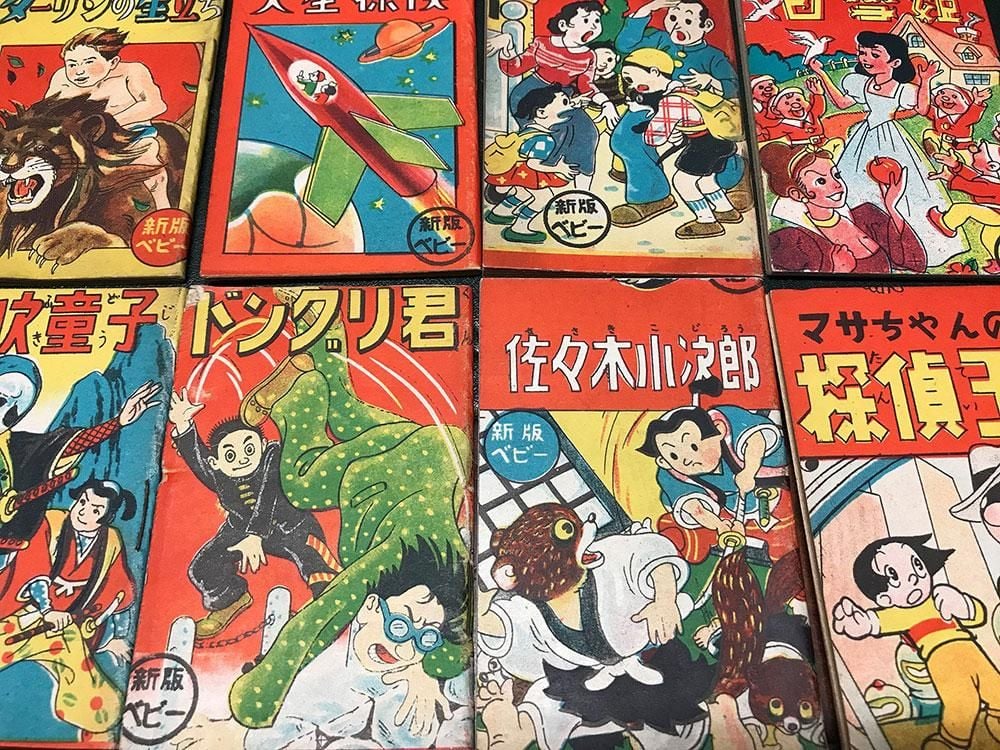
How Manga Influences Japanese Society
Manga is woven into daily life in Japan, influencing everything from education and media to business and social movements.
1. Manga in Education (教育・きょういく・Kyōiku)
- Many textbooks and study guides use manga-style illustrations to make learning more engaging.
- There are educational manga (学習漫画・がくしゅうまんが・Gakushū Manga) that teach subjects like history, science, and economics.
- Example: Nihon no Rekishi (日本の歴史・にほんのれきし), a manga history series used in schools.
2. Manga and the Japanese Language
- Manga reinforces language learning by showing casual and formal speech.
- Furigana (ふりがな)—small hiragana above kanji—helps readers learn new words.
- Reading manga improves kanji recognition and sentence structure understanding.
Example:
In Naruto (ナルト), characters use casual speech like “だってばよ!” (dattebayo!)—a fictional phrase that adds personality but isn’t standard Japanese.
3. Manga and Social Norms (社会・しゃかい・Shakai)
- Manga reflects social issues, such as bullying, family pressure, and gender roles.
- Genres like Josei (女性・じょせい) and Seinen (青年・せいねん) explore complex adult themes.
- Many manga highlight historical events and political commentary.
Example:
Barefoot Gen (はだしのゲン) depicts the Hiroshima atomic bombing, showing its effects on survivors.
4. Manga’s Economic Impact (経済・けいざい・Keizai)
- The manga industry is worth billions, with sales dominating Japan’s publishing market.
- Manga influences anime, movies, merchandise, and tourism.
- Many famous locations in Japan attract tourists because of manga references (e.g., Akihabara, Tokyo).
Essential Manga Vocabulary
Manga-Related Terms
| Kanji | Hiragana | Romaji | Meaning |
|---|---|---|---|
| 漫画 | まんが | manga | Japanese comics |
| 単行本 | たんこうぼん | tankōbon | Collected manga volumes |
| 少年漫画 | しょうねんまんが | shōnen manga | Manga for young boys |
| 少女漫画 | しょうじょまんが | shōjo manga | Manga for young girls |
| 成人向け | せいじんむけ | seijin-muke | Manga for adults |
| 同人誌 | どうじんし | dōjinshi | Self-published manga |
| 原作 | げんさく | gensaku | Original story (before anime adaptation) |
Using Manga to Learn Japanese
Want to use manga for language learning? Follow these study tips!
How to Study Japanese with Manga
- Start with beginner-friendly manga like Yotsuba&! (よつばと!) or Doraemon (ドラえもん).
- Use furigana-supported manga to help with kanji reading.
- Read aloud to practice pronunciation and rhythm.
- Write down new vocabulary and review it with flashcards.
- Try translating short sentences for deeper comprehension.
Recommended Manga for Learners:
Shirokuma Café (しろくまカフェ) – Easy, conversational Japanese.
Chii’s Sweet Home (チーズスイートホーム) – Simple vocabulary, perfect for beginners.
Final Study Challenge: Read and Review a Manga in Japanese!
Task: Pick a manga and complete the following steps:
Step 1: Read one chapter in Japanese.
Step 2: Write down 5 new words and their meanings.
Step 3: Summarize the chapter in 2-3 Japanese sentences.
Step 4: Share your favorite manga in the comments!
Example:
「ドラえもんの話を読みました。のび太はまた宿題を忘れました。でも、ドラえもんが助けました!」
(I read a Doraemon story. Nobita forgot his homework again. But Doraemon helped him!)
Conclusion: The Lasting Influence of Manga
Manga is one of the most powerful cultural forces in Japan, shaping language, education, and social identity. Whether you’re a casual reader or serious learner, using manga can enhance your Japanese skills while deepening your appreciation for Japanese culture.
💡 Next Steps:
- Read a manga in Japanese and take notes.
- Explore different genres and their social meanings.
- Join a manga reading group to discuss your findings!
Disclaimer: This guide is for educational purposes. Manga content varies by genre and audience.
Which manga helped you learn Japanese? Share in the comments below!
Click here for more articles related to Japanese language.

