

Why Learning About Japanese Festivals Boosts Your Language and Cultural Fluency
Have you ever watched videos of people dancing in yukata, eating street food under lantern-lit skies, or writing wishes on bamboo for Tanabata and thought: I want to understand this deeper?
Seasonal festivals in Japan—called 祭り(まつり)—are more than lively events. They reflect the country’s connection to nature, Shinto and Buddhist traditions, and the subtle ways the Japanese language expresses time, emotion, and community.
Learning about festivals isn’t just fun—it’s practical. Each event introduces new vocabulary, customs, and seasonal expressions that appear in everyday speech, media, and even JLPT exams.
This article explores:
- Key seasonal festivals by season
- Their cultural and historical roots
- Related vocabulary (with kanji, furigana, and romaji)
- Real-world usage tips
- Practice activities and a study challenge
Let’s celebrate, learn, and grow your Japanese fluency—one festival at a time!
Spring Festivals: Rebirth, Flowers & Fresh Starts
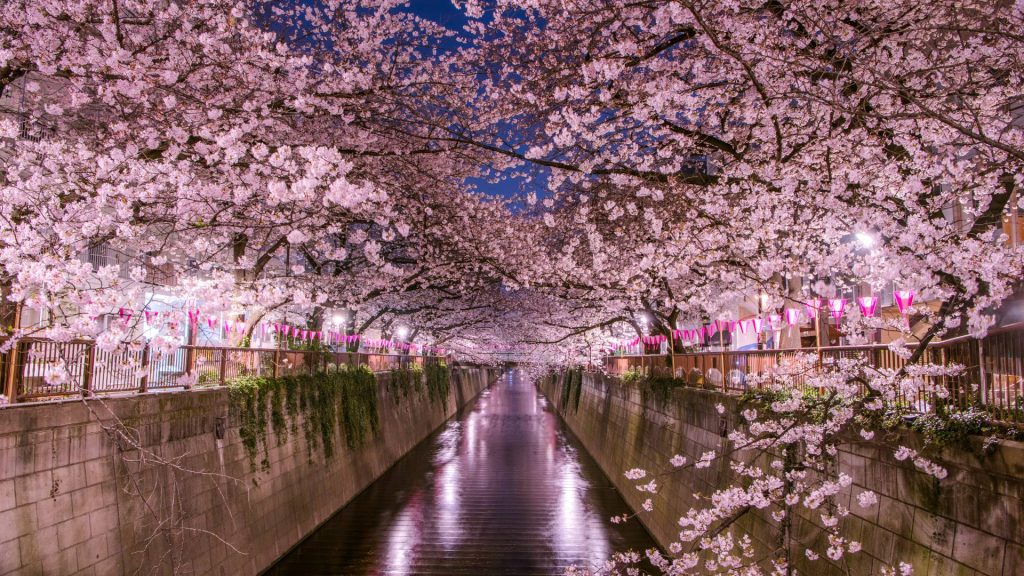
花見(はなみ)— Cherry Blossom Viewing
When: Late March to early April
Significance: A centuries-old custom of admiring sakura (cherry blossoms) that represents impermanence and beauty (related to mono no aware).
Vocabulary
| Japanese | Hiragana | Romaji | English |
|---|---|---|---|
| 桜 | さくら | sakura | Cherry blossom |
| 花見 | はなみ | hanami | Flower viewing |
| 満開 | まんかい | mankai | Full bloom |
| 散る | ちる | chiru | To fall (as flowers) |
Example Sentence:
桜が満開なので、公園で花見をします。
(さくら が まんかい なので、こうえん で はなみ を します。)
Because the cherry blossoms are in full bloom, we’ll have hanami in the park.
Summer Festivals: Fireworks, Community & Energy

夏祭り(なつまつり) & 花火大会(はなびたいかい)
When: July to August
Significance: Local festivals featuring 盆踊り(ぼんおどり), yukata, food stalls, and fireworks, often linked to お盆(おぼん), when ancestors are honored.
Vocabulary
| Japanese | Hiragana | Romaji | English |
|---|---|---|---|
| 浴衣 | ゆかた | yukata | Summer kimono |
| 盆踊り | ぼんおどり | bon odori | Bon dance |
| 祭り | まつり | matsuri | Festival |
| 花火 | はなび | hanabi | Fireworks |
Example Sentence:
夏祭りで浴衣を着て、花火を見ました。
(なつまつり で ゆかた を きて、はなび を みました。)
I wore a yukata to the summer festival and watched fireworks.
Autumn Festivals: Harvest, Thanks & Reflection
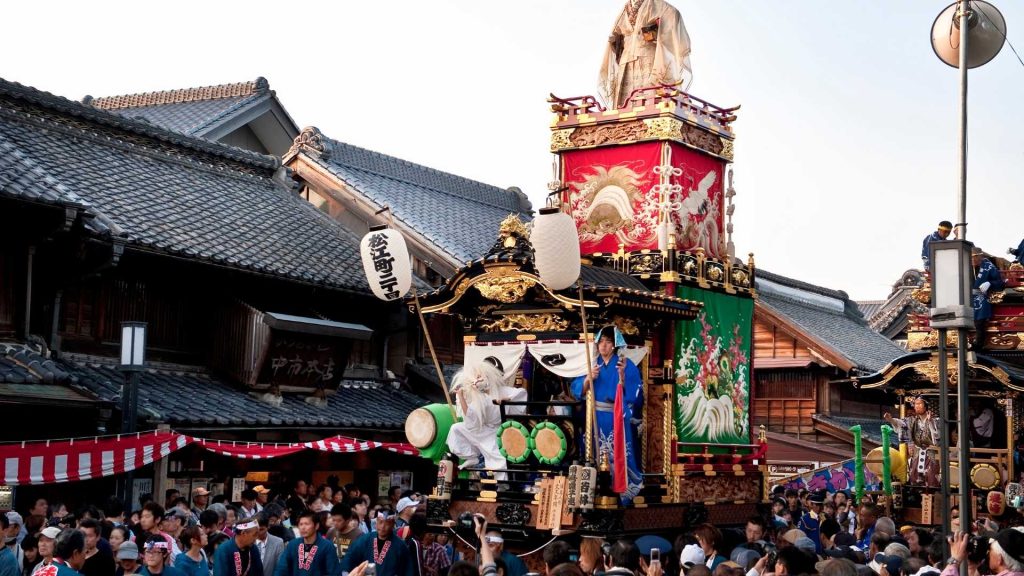
月見(つきみ)— Moon Viewing
When: Mid-September (around the harvest moon)
Significance: Reflecting on nature and giving thanks for the harvest. Traditionally celebrated with 団子(だんご) and poems.
Vocabulary
| Japanese | Hiragana | Romaji | English |
|---|---|---|---|
| 月 | つき | tsuki | Moon |
| 月見 | つきみ | tsukimi | Moon viewing |
| 団子 | だんご | dango | Rice dumplings |
| 感謝 | かんしゃ | kansha | Gratitude / thanks |
Example Sentence:
家族で団子を食べながら月見をしました。
(かぞく で だんご を たべながら つきみ を しました。)
We did moon viewing with the family while eating dango.
Winter Festivals: Light, Reflection & New Beginnings
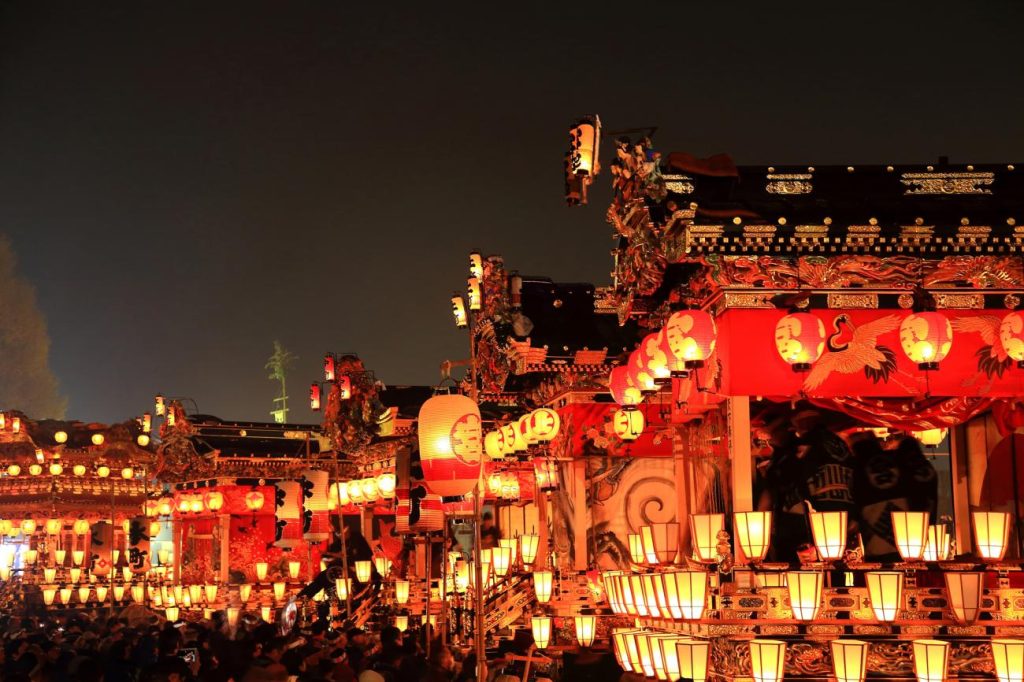
正月(しょうがつ)— New Year
When: January 1st–3rd
Significance: The most important holiday in Japan. People clean their homes, visit shrines, eat おせち料理(おせちりょうり), and write 年賀状(ねんがじょう).
Vocabulary
| Japanese | Hiragana | Romaji | English |
|---|---|---|---|
| 初詣 | はつもうで | hatsumōde | First shrine visit of the year |
| お年玉 | おとしだま | otoshidama | New Year’s money gift |
| 年賀状 | ねんがじょう | nengajou | New Year’s greeting card |
| おせち料理 | おせちりょうり | osechi ryōri | New Year food |
Example Sentence:
元日に神社で初詣をしました。
(がんじつ に じんじゃ で はつもうで を しました。)
On New Year’s Day, I visited a shrine for the first prayer of the year.
Cultural Context: Festivals Reflect Seasonal & Spiritual Cycles
Japanese festivals often have roots in:
- Shinto rituals (purification, offerings, nature reverence)
- Buddhist practices (honoring the dead, karmic cycles)
- Seasonal observances tied to the lunar calendar, agriculture, and cosmology
This explains why many Japanese expressions—like お疲れ様です or よろしくお願いします—carry deeper meanings of harmony, gratitude, and renewal.
Challenges When Learning Through Festivals
| Challenge | Strategy |
|---|---|
| Too many unfamiliar kanji | Focus on seasonal vocabulary grouped by season |
| Cultural references are confusing | Read simple explainers on Shinto/Buddhist traditions |
| Not sure how to use festival words in daily life | Practice with example sentences & roleplays (see below!) |
| Overwhelmed by too many festivals | Choose 1 festival per season and explore deeply |
Practice Tip: Make a Seasonal Festival Journal
Choose one festival from each season. For each, write:
- What the festival celebrates
- When it occurs
- 5 key vocabulary words
- 2 full Japanese sentences using new words
- How it compares to celebrations in your home country
You can even write it in Japanese as your level improves!
Case Study: How Luis Used Festivals to Prepare for JLPT N4
Luis, a university student from Brazil, struggled with listening and cultural comprehension. He started watching YouTube matsuri vlogs and wrote down festival-related expressions like:
- やっぱり夏祭りは最高!
- そろそろ花火が始まるよ!
By combining seasonal vocab with grammar review, he remembered 季節語(きせつご / seasonal words) more easily and scored 20% higher on the reading section in JLPT N4.
Recommended Resources
- Nihon no Matsuri (日本の祭り) – Easy-read books and videos about regional festivals
- Kids Web Japan – Great for beginner explanations and seasonal event lists
- NHK Easy News – Read about festivals in simplified Japanese
- YouTube Channels: WAO RYU!, Only in Japan Go
- App: Obenkyo – Use seasonal vocabulary sets for kanji learning
7-Day Matsuri-Themed Japanese Study Challenge
| Day | Task |
|---|---|
| Day 1 | Learn 5 spring festival words (like 花見, 桜, 散る) and write 2 sentences |
| Day 2 | Watch a YouTube video of a summer festival and describe it in Japanese |
| Day 3 | Practice reading a Tanabata wish strip aloud |
| Day 4 | Review keigo and greetings used during 正月 (e.g. 明けましておめでとう) |
| Day 5 | Create a seasonal flashcard deck using quiz apps |
| Day 6 | Compare a Japanese festival to a celebration in your culture—in Japanese |
| Day 7 | Teach a friend or language partner about one festival in Japanese! |
Final Thoughts: Let Festivals Be Your Language and Culture Gateway
Seasonal festivals in Japan are living lessons in tradition, language, and community. Whether it’s writing wishes on bamboo, watching fireworks in yukata, or eating mochi to welcome the new year, each celebration carries centuries of cultural nuance—and an opportunity to grow your Japanese skills.
So the next time a seasonal festival appears in a drama, textbook, or conversation, don’t skip it. Learn it, feel it, and use it as a stepping stone toward fluency.
Call to Action
Curious about experiencing these festivals in person?
Contact our team((info@mynihongosensei.com) to explore immersive language programs in Japan timed with seasonal matsuri. Learn the language where the culture lives—on the streets, in the shrines, and with the community.
Disclaimer
This article is for educational and cultural learning purposes. Festival names, dates, and customs may vary by region. For travel or religious participation, please confirm locally.

