
A Beginner’s Guide to Sashiko: Tools, Techniques, and Language for Lifelong Learners
Why Learn Sashiko? The Beauty of “Little Stabs” and Japanese Mindfulness
Have you ever admired the delicate white stitches against deep blue fabric on Japanese garments or home décor? That’s Sashiko (刺し子・さしこ・sashiko), a traditional form of Japanese embroidery that transforms simple running stitches into stunning geometric patterns. Originally developed to reinforce and repair clothing, Sashiko has evolved into a beloved art form that embodies mindfulness, sustainability, and the beauty of imperfection. For language learners, Sashiko offers a hands-on way to connect with Japanese culture, vocabulary, and history—one stitch at a time.
What is Sashiko? Key Concepts and Real-World Examples
- Sashiko (刺し子): Meaning “little stabs,” Sashiko uses a basic running stitch to create decorative and functional designs on fabric. Traditionally, white cotton thread is stitched onto indigo-dyed cloth, but today, Sashiko comes in all colors and applications.
- Origins: Sashiko began as a practical technique among rural Japanese communities to reinforce, patch, and extend the life of precious textiles. Over centuries, it became a decorative folk art, with regional styles and motifs.
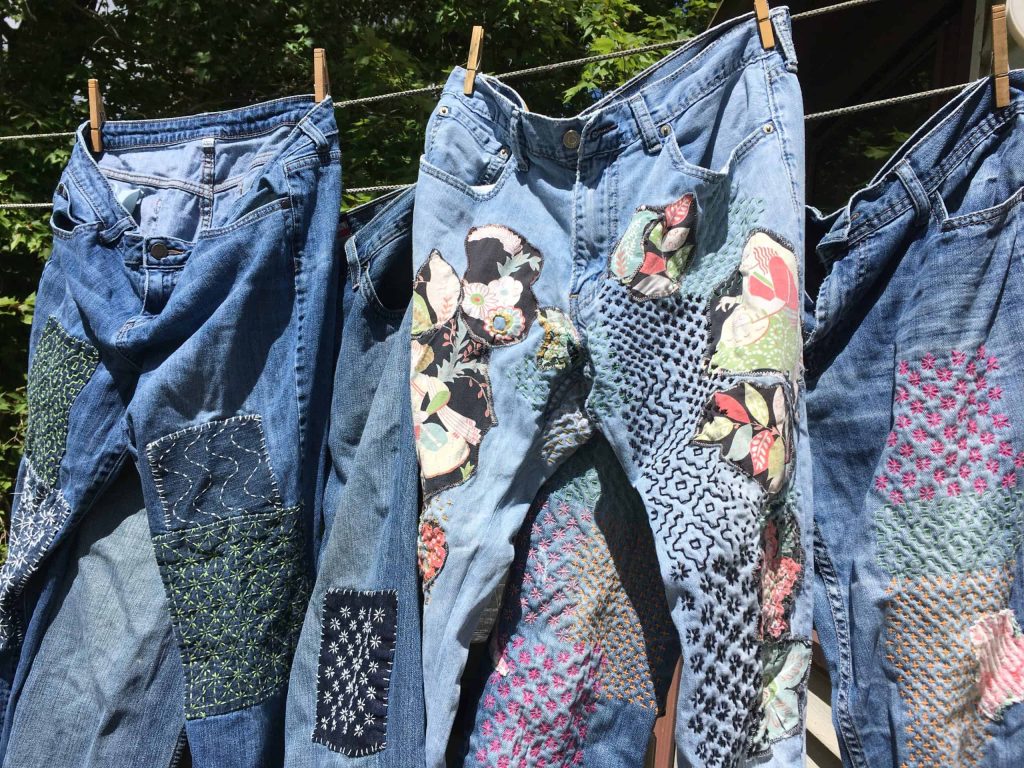
- Modern Sashiko: Today, Sashiko is used for visible mending, quilting, home décor, and fashion—celebrating both tradition and creativity.
Real-World Example
Imagine a well-loved jacket, patched with layers of indigo fabric and adorned with neat rows of white stitches. Each stitch not only strengthens the garment but also tells a story—of resourcefulness, care, and artistry. Now, Sashiko is used worldwide to mend jeans, decorate bags, and create beautiful wall hangings.
Tools & Materials: What You Need to Start Sashiko
- Sashiko Thread (刺し子糸・さしこいと・sashiko ito): Thicker and sturdier than regular embroidery thread, usually cotton.
- Sashiko Needle (刺し子針・さしこばり・sashiko bari): Long, strong, with a large eye for thick thread.
- Fabric (布・ぬの・nuno): Traditionally indigo-dyed cotton, but any solid cotton works well for beginners.
- Thimble (指ぬき・ゆびぬき・yubinuki): Sashiko thimbles are worn on the palm for pushing the needle.
- Pattern (模様・もよう・moyou): Choose traditional geometric designs or create your own.
- Tracing Tools: Chalk pencil or tracing paper for transferring patterns.
Tip: You don’t need expensive supplies to begin—just a needle, thread, and some fabric!
Key Vocabulary (Kanji, Furigana, Romaji, Definitions)
| Kanji | Furigana | Romaji | Definition |
|---|---|---|---|
| 刺し子 | さしこ | sashiko | Sashiko, “little stabs” embroidery |
| 糸 | いと | ito | Thread |
| 針 | はり | hari | Needle |
| 布 | ぬの | nuno | Fabric |
| 指ぬき | ゆびぬき | yubinuki | Thimble |
| 模様 | もよう | moyou | Pattern, motif |
| 縫う | ぬう | nuu | To sew, to stitch |
| 図案 | ずあん | zuan | Design, draft |
| 補強 | ほきょう | hokyou | Reinforcement |
| 修繕 | しゅうぜん | shūzen | Mending, repair |
| 藍染め | あいぞめ | aizome | Indigo dye |
| 伝統 | でんとう | dentō | Tradition |
| 幾何学 | きかがく | kikagaku | Geometry, geometric |
Cultural Context & Usage Scenarios
- Visible Mending: Sashiko is still used to mend and reinforce clothing, especially jeans and workwear, turning repairs into art.
- Mindfulness: The repetitive, rhythmic stitching is meditative and calming—perfect for practicing mindfulness.
- Community & Heritage: Sashiko patterns and techniques are passed down through generations, connecting families and regions.
- Modern Craft: Sashiko appears in quilting, accessories, and contemporary fashion worldwide.
How to Stitch Sashiko: Step-by-Step Guide
Step 1: Prepare Your Materials
- Choose your fabric and thread.
- Transfer your chosen pattern onto the fabric using chalk or tracing paper.
Step 2: Thread the Needle
- Cut a length of sashiko thread (about 18–24 inches).
- Thread your needle and tie a knot at the end.
Step 3: Start Stitching
- Insert the needle from the back of the fabric.
- Use a running stitch (“little stabs”) to follow the pattern. Try to keep stitches even—traditionally, each stitch is about the size of a grain of rice.
- “Load” several stitches onto the needle at once before pulling the thread through for a smooth, even line.
Step 4: Turning Corners & Changing Direction
- Leave a small loop of thread at the back when changing direction to prevent puckering.
- When you finish a thread, weave the end through previous stitches on the back to secure.
Step 5: Finish and Care
- Once your design is complete, gently wash to remove any pattern markings.
- Press with a warm iron if needed.
Practical Example: Try stitching a simple square or wave pattern (seigaiha 青海波・せいがいは) on a fabric scrap. Focus on making even stitches and enjoy the process!
Sashiko Patterns: Inspiration and Meaning
- Asanoha (麻の葉・あさのは): Hemp leaf, symbolizing growth and resilience.
- Kikkō (亀甲・きっこう): Tortoise shell, symbolizing longevity.
- Seigaiha (青海波・せいがいは): Blue ocean waves, symbolizing peace and good luck.
- Shippō (七宝・しっぽう): Seven treasures, representing harmony.
Case Study: A Learner’s Sashiko Journey
Emma, a Japanese language student, started Sashiko as a way to relax after studying. She joined an online workshop and stitched a set of coasters using the asanoha pattern. As she practiced, she learned new vocabulary, discovered the calming rhythm of stitching, and even used her Sashiko skills to mend her favorite jeans. Emma now feels more connected to Japanese culture and enjoys sharing her creations with friends.
Practice Exercises
- Vocabulary Drill: Write each key word in kanji, hiragana, and romaji. Use them in a sentence about Sashiko.
- Pattern Practice: Draw a simple Sashiko pattern on paper, then transfer it to fabric and stitch it.
- Cultural Reflection: Write a short paragraph comparing Sashiko to a textile tradition from your own culture.
- Listening Practice: Watch a Sashiko tutorial video and note down new words and techniques.
Study Challenge: Your First Sashiko Project
- Action Step: Gather basic materials (needle, thread, fabric) and complete a small Sashiko project—such as a coaster or patch for jeans.
- Language Task: Write a diary entry in Japanese about your experience. For example:
今日は刺し子でコースターを作りました。楽しかったです。
(Kyō wa sashiko de kōsutā o tsukurimashita. Tanoshikatta desu.)
Today I made a coaster with Sashiko. It was fun.
Recommended Resources
- Books:
“The Ultimate Sashiko Sourcebook” by Susan Briscoe
“Sashiko for Making and Mending” by Saki Iiduka
“Amazing Sashiko: Modern Japanese Embroidery Designs” by Ayufish Int. - Online Tutorials:
YouTube: Search “Sashiko beginner tutorial” for step-by-step videos
Create Whimsy and Studio Koekoek: Free guides and project ideas - Workshops:
Sashiko Australia, Romor Designs, and Upcycle Stitches offer online and in-person classes for all levels.
Key Challenges & Considerations
- Even Stitches: Consistency takes practice. Don’t worry if your first stitches are uneven—focus on the rhythm.
- Patience: Sashiko is meditative and slow. Enjoy the process, not just the result.
- Material Choices: Traditional indigo and white are beautiful, but feel free to experiment with colors and fabrics.
Conclusion & Call to Action
Sashiko is more than embroidery—it’s a mindful, creative journey into Japanese culture and language. By starting your own Sashiko project, you’ll gain new skills, vocabulary, and a deeper appreciation for the art of making and mending. Ready to experience Sashiko in Japan? Contact our team for information on workshops, tours, and opportunities to visit, work, and live in Japan!
Disclaimer: This article is for educational purposes only. For hands-on Sashiko experiences, always follow the guidance of certified instructors and respect cultural etiquette. Contact us for recommendations on workshops and travel opportunities in Japan.

