
Discover How Japan’s Unique Geography Shapes Its Climate and Culture
Introduction: Why Geography Matters for Japanese Learners
Have you ever wondered why cherry blossoms bloom at different times across Japan, or why Japanese cuisine varies so much from Hokkaido to Okinawa? Japan’s geography—from its mountainous islands to its position in the Pacific—shapes everything from the weather to the way people live, eat, and celebrate. Understanding this connection not only deepens your appreciation of Japanese culture but also helps you master the language in real-life contexts. Let’s explore how geography, climate, and culture are woven together in Japan!
Key Concepts: Japan’s Geography at a Glance
Japan is an archipelago of over 6,800 islands, but four main islands dominate: Honshu, Hokkaido, Kyushu, and Shikoku. The country stretches over 3,000 kilometers from north to south, creating dramatic differences in climate and lifestyle.
| Region | Kanji (漢字) | Furigana (ふりがな) | Romaji | Key Features |
|---|---|---|---|---|
| Hokkaido | 北海道 | ほっかいどう | Hokkaidō | Cold winters, snow, seafood |
| Honshu | 本州 | ほんしゅう | Honshū | Mountains, major cities, variety |
| Shikoku | 四国 | しこく | Shikoku | Mild climate, rivers, pilgrimage |
| Kyushu | 九州 | きゅうしゅう | Kyūshū | Warm, volcanic, hot springs |
| Okinawa | 沖縄 | おきなわ | Okinawa | Subtropical, beaches, unique culture |
Japan’s Main Geographic Features
- Mountains: Cover about 70% of the land.
- Rivers and Lakes: Short, fast rivers; few large lakes.
- Coastline: Long and rugged, with many bays and inlets.
- Islands: Stretch from cold Hokkaido to tropical Okinawa.
How Geography Shapes Japan’s Climate
Japan’s location and topography create a wide range of climates:
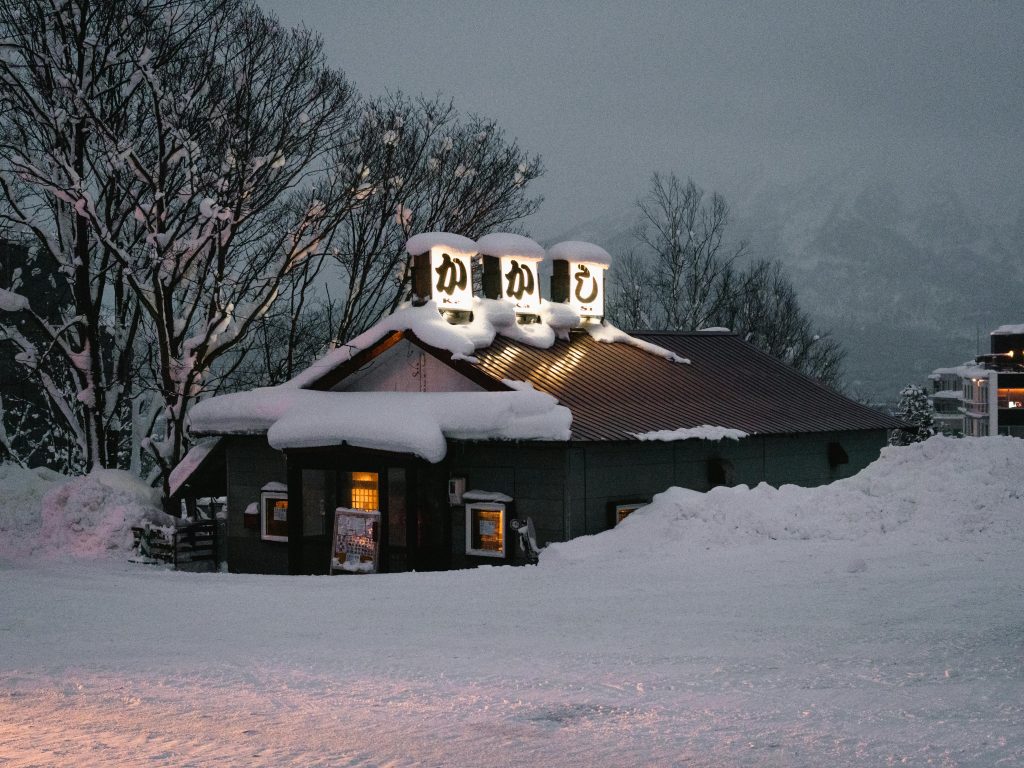
- Northern Japan (Hokkaido): Long, cold winters with heavy snow.
- Central Japan (Honshu): Four distinct seasons; hot, humid summers and cold winters.
- Southern Japan (Kyushu, Okinawa): Warm, rainy, and subtropical.
- Rainy Season (梅雨, つゆ, tsuyu): Early summer brings weeks of rain.
- Typhoon Season (台風, たいふう, taifū): Late summer and early autumn.
Example Sentences
- 北海道は雪が多いです。
(ほっかいどうは ゆきが おおいです。)
Hokkaidō wa yuki ga ōi desu.
“Hokkaido has a lot of snow.” - 沖縄は一年中暖かいです。
(おきなわは いちねんじゅう あたたかいです。)
Okinawa wa ichinenjū atatakai desu.
“Okinawa is warm all year round.”
Cultural Context: How Climate and Geography Shape Japanese Life
Festivals and Traditions
- Cherry Blossom Viewing (花見, はなみ, hanami): Timing varies from south to north.
- Snow Festivals: Sapporo’s famous Snow Festival (雪まつり, ゆきまつり, yuki matsuri).
- Fireworks (花火, はなび, hanabi): Popular in humid summer evenings.
Food and Agriculture
- Rice (米, こめ, kome): Grown in terraced fields (田んぼ, たんぼ, tanbo) on mountain slopes.
- Seafood: Abundant due to Japan’s long coastline.
- Regional Specialties:
- 北海道のラーメン (Hokkaido ramen)
- 京都の湯豆腐 (Kyoto yudofu)
- 沖縄のゴーヤチャンプルー (Okinawa goya champuru)
Architecture and Daily Life
- Houses: Built for ventilation in humid areas, with steep roofs in snowy regions.
- Clothing: Seasonal kimono styles and materials.
Vocabulary List
| English | Kanji | Furigana | Romaji | Definition |
|---|---|---|---|---|
| Geography | 地理 | ちり | chiri | Geography |
| Climate | 気候 | きこう | kikō | Climate |
| Culture | 文化 | ぶんか | bunka | Culture |
| Island | 島 | しま | shima | Island |
| Mountain | 山 | やま | yama | Mountain |
| River | 川 | かわ | kawa | River |
| Coastline | 海岸線 | かいがんせん | kaigansen | Coastline |
| Snow | 雪 | ゆき | yuki | Snow |
| Rainy season | 梅雨 | つゆ | tsuyu | Rainy season |
| Typhoon | 台風 | たいふう | taifū | Typhoon |
| Festival | 祭り | まつり | matsuri | Festival |
| Rice field | 田んぼ | たんぼ | tanbo | Rice field |
| Seafood | 海産物 | かいさんぶつ | kaisanbutsu | Seafood |
Practical Examples in Context
1. Talking About the Weather
- 今日は雨です。
(きょうは あめです。)
Kyō wa ame desu.
“It’s raining today.” - 台風が来ます。
(たいふうが きます。)
Taifū ga kimasu.
“A typhoon is coming.”
2. Describing Regions
- 九州は温泉が多いです。
(きゅうしゅうは おんせんが おおいです。)
Kyūshū wa onsen ga ōi desu.
“Kyushu has many hot springs.” - 本州にはたくさんの山があります。
(ほんしゅうには たくさんの やまが あります。)
Honshū ni wa takusan no yama ga arimasu.
“There are many mountains in Honshu.”
Key Challenges & How to Overcome Them
- Kanji Recognition: Many geography and weather words use unique kanji.
- Regional Vocabulary: Local dialects and terms for weather, food, and festivals.
- Understanding Context: Weather and geography influence daily conversation and media.
Tips
- Use flashcards for kanji and vocabulary.
- Watch Japanese weather forecasts for listening practice.
- Explore regional travel vlogs to hear local expressions.
Recommended Resources
- NHK Easy News (for weather and regional news)
- JapanesePod101 (listening practice on geography and culture)
- Google Maps in Japanese (practice reading place names)
- YouTube: “Abroad in Japan” or “TabiEats” (travel and food culture)
- Jisho.org (dictionary for geography terms)
Practice Exercises
1. Kanji Matching
Match the kanji to the English word:
- 山 (____)
- 川 (____)
- 雪 (____)
- 祭り (____)
2. Fill in the Blank
Translate and fill in:
- “There are many mountains in Japan.”
(日本には____がたくさんあります。) - “I like Japanese festivals.”
(私は日本の____が好きです。)
3. Write a Short Paragraph
Describe the climate of your favorite Japanese region using at least three vocabulary words from the list. Include kanji, furigana, and romaji.
Study Challenge: Regional Research
Pick a region of Japan. Research its climate, a local festival, and a famous food. Write a short paragraph in English and Japanese (with kanji, furigana, and romaji) about how geography influences its culture. Share with a language partner or teacher for feedback!
Action Steps
- Review the vocabulary list daily.
- Watch a Japanese weather report and note new words.
- Complete the practice exercises and the study challenge.
- Explore Japanese travel blogs or documentaries.
- Contact our team for more learning tips or opportunities to visit, work, or live in Japan!
Ready to Experience Japan’s Diversity?
Understanding how geography shapes Japan’s climate and culture will help you connect with the language and people on a deeper level. Keep exploring, stay curious, and use these insights to enrich your Japanese journey. If you want more resources or are interested in experiencing Japan firsthand, contact our team for personalized support!
Click here to learn more about Japanese vocabulary.
Disclaimer: This article is for educational purposes. For travel, study, or work guidance, please contact our team for up-to-date information and support.

