
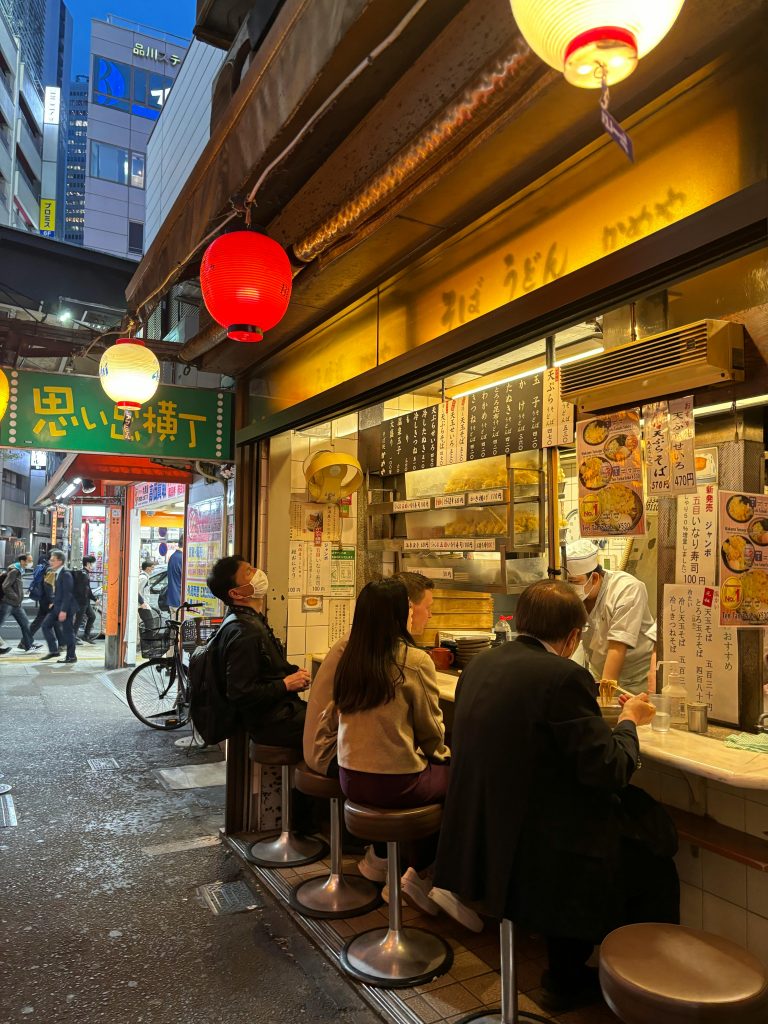
Why Food and Language Go Hand in Hand
Learning Japanese through food isn’t just fun—it’s powerful. In Japan, food is culture. Ordering ramen or chatting with a chef teaches you real-world Japanese—from vocabulary to pronunciation to manners.
And where better to start than Shibuya (渋谷・しぶや)—one of Tokyo’s most vibrant, youthful, and food-obsessed neighborhoods? Whether it’s sushi, yakitori, or boba tea, Shibuya has something for everyone—especially Japanese learners hungry for authentic practice.
Best Places to Eat in Shibuya & Learn Japanese While You’re There
Uobei Sushi (魚べい・うおべい) – High-Tech Conveyor Belt Sushi
Experience ordering sushi from a touchscreen in Japanese!
📍Address: 2 Chome-29-11 Dogenzaka
Try ordering:
サーモンを一皿ください。
(Saamon o hito-sara kudasai.)
One plate of salmon, please.
Torikizoku (鳥貴族・とりきぞく) – Budget Yakitori Izakaya
Learn izakaya (Japanese pub) language and food words. Great for casual speech!
📍Address: All over Shibuya
Learn this:
おすすめは何ですか?
(Osusume wa nan desu ka?)
What do you recommend?
Ichiran Ramen (一蘭・いちらん) – Solo Dining Ramen Perfection
Order by vending machine. Great for introverts and vocabulary practice.
📍Address: Shibuya-ku, Dogenzaka
Menu words to learn:
替え玉 (かえだま / kaedama) – Noodle refill
味の濃さ (あじのこさ / aji no kosa) – Broth strength
Shibuya Hikarie Food Hall – High-End Japanese Department Store Dining
Great for kanji spotting and food-specific terms.
📍Address: Inside Shibuya Hikarie Building
Try reading labels like:
和菓子 (わがし / wagashi) – Traditional sweets
惣菜 (そうざい / souzai) – Prepared side dishes
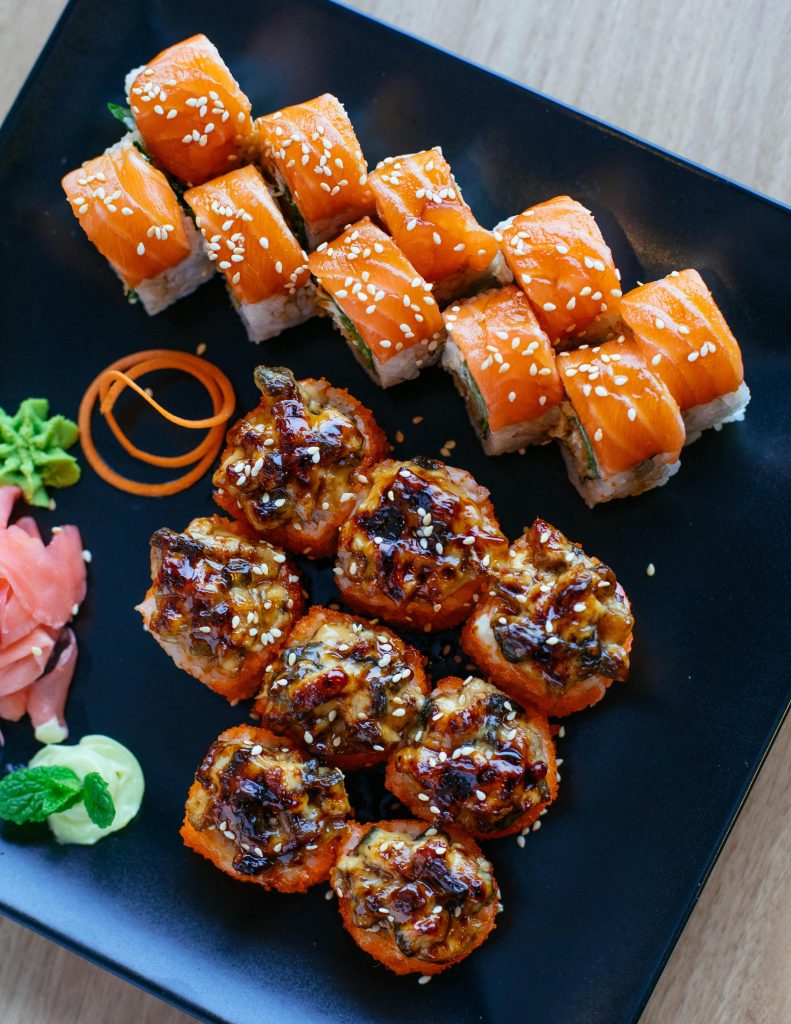
Genki Sushi (元気寿司・げんきずし) – Friendly Conveyor Sushi with English Options
An easy transition for beginners with bilingual menus.
📍Address: 24-8 Udagawachō
Phrase to try:
注文したいです。
(Chuumon shitai desu.)
I’d like to order, please.
Essential Vocabulary for Eating Out in Japan
| Kanji | Hiragana | Romaji | Meaning | Example |
|---|---|---|---|---|
| 店 | みせ | mise | Store/restaurant | この店は有名です。(This place is famous.) |
| 注文 | ちゅうもん | chuumon | Order (noun/verb) | 注文お願いします。(I’d like to order, please.) |
| 美味しい | おいしい | oishii | Delicious | このラーメンは美味しい!(This ramen is delicious!) |
| ご飯 | ごはん | gohan | Rice/meal | ご飯を食べましょう。(Let’s eat a meal.) |
| 一皿 | ひとさら | hito-sara | One plate | 一皿だけお願いします。(Just one plate, please.) |
| 熱い | あつい | atsui | Hot (temperature) | スープが熱いです。(The soup is hot.) |
| 冷たい | つめたい | tsumetai | Cold (object) | お茶が冷たい。(The tea is cold.) |
Japanese Dining Etiquette & Cultural Tips
Knowing what to say is just as important as how you say it. Use these cultural phrases and tips:
🔹 いただきます (Itadakimasu) – Said before eating
🔹 ごちそうさまでした (Gochisousama deshita) – Said after finishing a meal
🔹 Avoid sticking chopsticks vertically in rice—it’s a funeral symbol
🔹 Slurping noodles is not rude—it’s encouraged!
Listening & Pronunciation Practice
Use Forvo or YouTube to hear native pronunciation of:
- 美味しい (おいしい / oishii) – Delicious
- 注文する (ちゅうもんする / chuumon suru) – To order
- ごちそうさまでした (gochisousama deshita) – Thank you for the meal
Pitch Tip: 注文 (chuumon) typically has rising pitch → ちゅ↑う↓もん
Practice Exercises
Fill in the blanks
私は(___)で(___)を注文しました。
I ordered () at ().
a) 魚べい (Uobei)
b) ラーメン (ramen)
➡ Answer: 私は魚べいでラーメンを注文しました。
Translate this sentence:
“This restaurant is delicious and cheap.”
Answer:
この店は美味しくて安いです。
(Kono mise wa oishikute yasui desu.)
Mnemonics for Food Kanji
- 🍚 飯 (はん / han) – Think of it as a picture of a bowl with rice
- 🐟 魚 (さかな / sakana) – The left part looks like a fish tail
- 🍢 串 (くし / kushi) – Two things on a skewer!
Study Challenge
Try this week’s challenge:
- Learn and use 10 food-related vocabulary words
- Go to a Japanese restaurant (or watch a video of one) and practice ordering aloud
- Write a restaurant review in Japanese using 3 new words from today’s blog
Example Starter:
昨日、渋谷のラーメン屋に行きました。とても美味しかったです!また行きたいです。
(Yesterday, I went to a ramen shop in Shibuya. It was really delicious! I want to go again.)
Final Thoughts & Takeaway
The best way to learn Japanese is to experience it. And food? It’s the gateway to culture, connection, and conversation. Shibuya is more than a famous crossing—it’s a place where your taste buds and language skills can grow together.
So go ahead—order something new, chat with a chef, or read a menu in kanji. With every bite, you’re becoming a better Japanese speaker.
Want to Visit or Study in Japan?
If you’re serious about taking your Japanese to the streets (and restaurants) of Tokyo, contact our team at referjapan.com to learn more about study abroad, work, or cultural immersion programs in Japan.
Click here for more articles related to Japanese grammar.

