
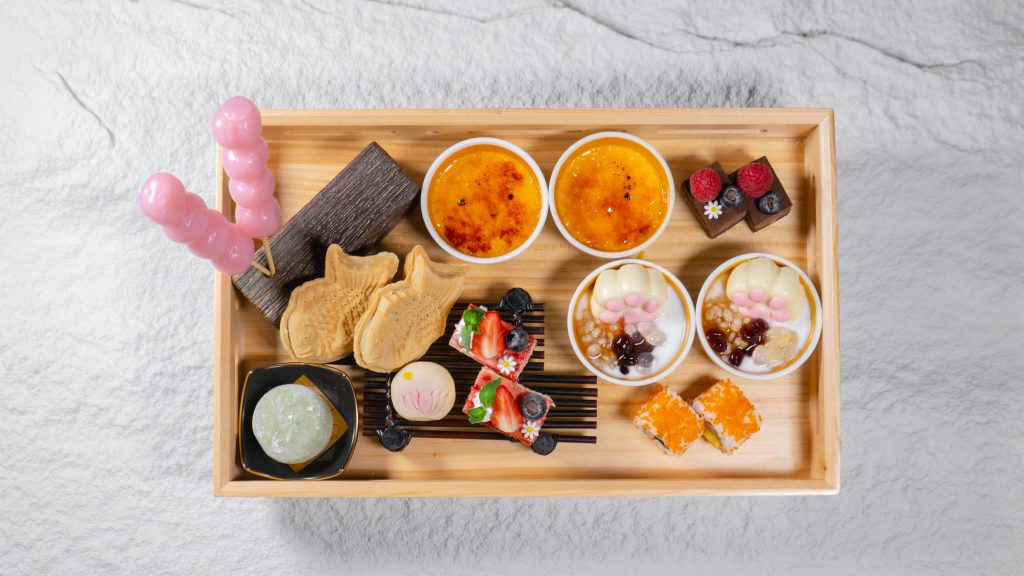
Introduction
When visiting Japan, you’ll quickly notice beautiful sweets that look more like art than desserts. These are wagashi(和菓子)—traditional Japanese sweets deeply connected to seasonality, tea culture, and aesthetics.
For Japanese learners, wagashi are also a great way to learn useful food vocabulary you’ll see in shops, cafés, and museums.
This beginner-friendly guide explains:
- What wagashi are
- Major types of wagashi
- Their cultural meaning
- Essential Japanese vocabulary related to wagashi
🍡 What Are Wagashi?
Wagashi(和菓子) are traditional Japanese sweets, usually made from:
- Rice flour
- Sweet red bean paste
- Sugar
- Agar (kanten)
They are often:
- Lightly sweet
- Soft in texture
- Served with green tea
Unlike Western desserts, wagashi focus on balance, not richness.
🌸 The Cultural Meaning of Wagashi
Wagashi are more than food—they express:
- Seasonality(季節)
- Nature motifs (flowers, leaves, snow)
- Mindfulness and simplicity
In tea ceremonies, wagashi prepare the palate for matcha, both visually and taste-wise.
Each season has its own wagashi designs:
- Spring → cherry blossoms
- Summer → water, cool colors
- Autumn → leaves, chestnuts
- Winter → snow, camellias
🍥 Common Types of Wagashi (Beginner-Friendly)
大福(だいふく)— Daifuku
Mochi filled with sweet red bean paste.
Popular variations:
- Strawberry daifuku
- Matcha daifuku
➡ Soft, chewy, and very common.
団子(だんご)— Dango
Rice flour dumplings on a skewer.
Often eaten:
- At festivals
- During cherry blossom season
➡ Simple and lightly sweet.
どら焼き(どらやき)— Dorayaki
Two pancake-like cakes filled with red bean paste.
➡ Very popular and beginner-friendly.
羊羹(ようかん)— Yōkan
Firm jelly made from red bean paste and agar.
➡ Often given as gifts.
最中(もなか)— Monaka
Crispy wafer shells filled with sweet paste.
➡ Crunchy outside, soft inside. 練り切り(ねりきり)— Nerikiri
Highly artistic wagashi made by hand.
➡ Common in tea ceremonies and high-end shops.
🍵 Wagashi and Tea Culture
Wagashi are traditionally eaten with:
- 抹茶(まっちゃ)— Matcha
- 煎茶(せんちゃ)— Green tea
The sweetness of wagashi balances the bitterness of tea.
📌 A Beginner’s Guide to Japanese Tea
🧠 Key Wagashi Vocabulary (Beginner Table)
| Japanese | Reading | Meaning |
|---|---|---|
| 和菓子 | わがし | Traditional Japanese sweets |
| 甘い | あまい | Sweet |
| 餅 | もち | Rice cake |
| あんこ | あんこ | Sweet red bean paste |
| 小豆 | あずき | Azuki beans |
| 砂糖 | さとう | Sugar |
| 季節 | きせつ | Season |
| 抹茶 | まっちゃ | Matcha |
| 茶道 | さどう | Tea ceremony |
| 店 | みせ | Shop |
These words appear frequently in wagashi shops and menus.
🛍️ How to Buy Wagashi in Japan (Useful Phrases)
✔ Asking for recommendations
おすすめは何ですか?
What do you recommend?
✔ Choosing items
これをください。
I’ll take this.
✔ Asking about flavors
中は何ですか?
What’s inside?
✔ Asking about sweetness
甘いですか?
Is it sweet?
🎎 Wagashi in Modern Japan
Today, wagashi appear:
- In department stores
- At festivals
- In cafés
- As seasonal gifts
Modern wagashi makers also experiment with:
- Chocolate
- Fruit
- Western-style presentation
But the core values—simplicity and seasonality—remain unchanged.
🎯 Summary
Wagashi represent:
- Japanese aesthetics
- Seasonal awareness
- Cultural tradition
- A gentle approach to sweetness
For Japanese learners, wagashi are a fun and delicious way to learn food vocabulary and cultural context at the same time.
📘 Want to Learn Japanese Through Food & Culture?
Our 4 free beginner Japanese lessons combine language with real-life topics like food, travel, and daily life in Japan.

