
Introduction
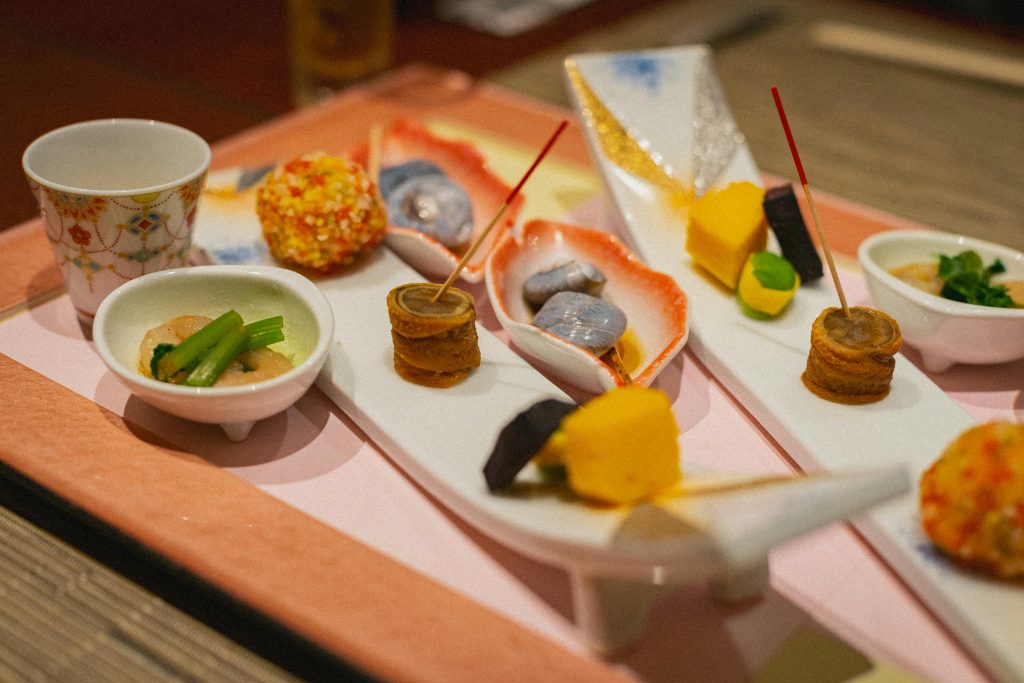
Kaiseki(懐石)is often described as Japan’s highest form of cuisine—but it’s more than just fine dining. Kaiseki is a culinary art that reflects Japanese values of seasonality, balance, simplicity, and mindfulness.
For Japanese learners, kaiseki is also a great way to understand:
- Food-related vocabulary
- Cultural etiquette
- How aesthetics and language connect
This beginner-friendly guide explains what kaiseki is, how it developed, what you’ll see in a kaiseki meal, and the key Japanese vocabulary you’ll encounter.
🍱 What Is Kaiseki? (In Simple Terms)
Kaiseki(懐石) is a traditional multi-course Japanese meal focused on:
- Seasonal ingredients
- Visual beauty
- Subtle flavors
- Balance and harmony
Unlike Western fine dining, kaiseki emphasizes restraint, not richness. Each dish highlights the natural taste of its ingredients.
🕰️ The Origins of Kaiseki
Kaiseki originated from the tea ceremony.
Early tea practitioners served a simple meal to warm the body before drinking matcha. Over time, this meal evolved into a refined dining experience closely connected to:
- Zen philosophy
- Tea culture
- Hospitality (おもてなし)
There are two related styles:
- 茶懐石(ちゃかいせき) – tea ceremony cuisine
- 会席料理(かいせきりょうり) – celebratory banquet cuisine
Today, most restaurant “kaiseki” blends elements of both.
🌸 The Importance of Seasonality
Seasonality (季節感・きせつかん) is central to kaiseki.
You’ll notice:
- Spring → bamboo shoots, cherry blossoms
- Summer → light dishes, cooling presentation
- Autumn → mushrooms, chestnuts
- Winter → warming soups, root vegetables
Even plates and decorations change with the season.
🍽️ Typical Kaiseki Course Structure
While menus vary, a traditional kaiseki meal often includes:
1️⃣ 先付(さきづけ) – Small appetizer
2️⃣ 椀物(わんもの) – Seasonal soup
3️⃣ 向付(むこうづけ) – Sashimi
4️⃣ 焼物(やきもの) – Grilled dish
5️⃣ 煮物(にもの) – Simmered dish
6️⃣ 揚物(あげもの) – Fried dish (optional)
7️⃣ 食事(しょくじ) – Rice, soup, pickles
8️⃣ 甘味(かんみ) – Dessert
Each dish is carefully paced and presented.
🎨 Presentation Is Part of the Meal
In kaiseki, how food looks is as important as how it tastes.
Presentation reflects:
- Nature (leaves, stones, water)
- Asymmetry and space
- Color balance
This idea connects to the concept of 間(ま)—meaningful space or pause.
🧠 Kaiseki Etiquette (Beginner-Friendly)
You don’t need expert knowledge to enjoy kaiseki, but these tips help:
✔ Eat slowly
✔ Appreciate presentation before eating
✔ Avoid strong perfumes
✔ Don’t rush courses
✔ Say いただきます before and ごちそうさまでした after
Kaiseki is meant to be experienced, not rushed.
🧾 Key Kaiseki Vocabulary (Beginner Table)
| Japanese | Reading | Meaning |
|---|---|---|
| 懐石 | かいせき | Kaiseki cuisine |
| 料理 | りょうり | Cooking / cuisine |
| 季節 | きせつ | Season |
| 食材 | しょくざい | Ingredient |
| 味 | あじ | Taste |
| 器 | うつわ | Dish / plate |
| 美しい | うつくしい | Beautiful |
| 新鮮 | しんせん | Fresh |
| 和食 | わしょく | Japanese food |
| おもてなし | おもてなし | Hospitality |
These words appear often in menus and explanations.
🍵 Kaiseki and Japanese Culture
Kaiseki reflects broader Japanese values:
- Respect for nature
- Attention to detail
- Mindfulness
- Balance over excess
It shares philosophical roots with:
- Tea ceremony
- Zen aesthetics
- Traditional arts
Understanding kaiseki helps explain why Japanese food culture values subtlety and intention.
🎯 Summary
Kaiseki is:
- A seasonal culinary art
- A reflection of Japanese philosophy
- A cultural experience, not just a meal
For Japanese learners, kaiseki offers insight into:
- Food vocabulary
- Cultural etiquette
- Aesthetic thinking
Even if you never eat full kaiseki, understanding it deepens your appreciation of Japanese culture.
📘 Want to Learn Japanese Through Food & Culture?
Our 4 free beginner Japanese lessons combine language learning with cultural topics like food, etiquette, and daily life in Japan.
📌 More Links for Japanese Learners
- A Beginner’s Guide to Wagashi
- Japanese Tea Culture Explained
- Japanese Architecture Explained
- The Art of Omotenashi (Hospitality)
- The Ultimate Checklist for Moving to Japan
- Top Japanese Language Schools in Japan

