
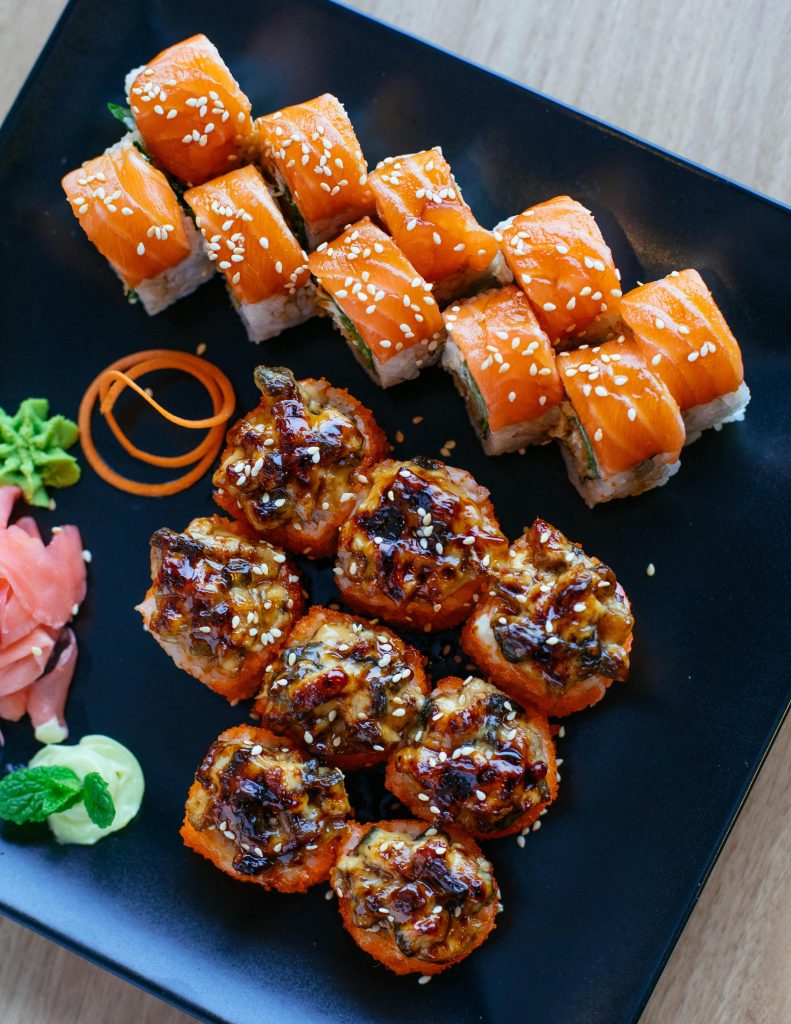
The Language of Sushi: Essential Terms to Know
If you’ve ever sat down at a sushi counter in Japan or browsed a Japanese sushi menu, you’ve likely felt the thrill—and maybe confusion—of facing a world of unfamiliar words.
The Language of Sushi isn’t just delicious—it’s a fun, culturally rich, and rewarding gateway into learning Japanese.
From kanji-heavy menus to counter interactions with sushi chefs (板前・いたまえ・itamae), understanding sushi vocabulary will deepen your appreciation for Japanese cuisine, sharpen your language skills, and impress your local sushi chef.
Why Learning Sushi Terms Is Powerful for Japanese Learners
Food is one of the best teachers.
When you learn the language of sushi, you’re not just learning nouns—you’re learning how to interact in Japanese, recognize real-world kanji, and build confidence in natural conversation settings.
By the end of this article, you’ll be able to:
- Order sushi in Japanese with confidence
- Recognize key kanji on menus
- Use culturally appropriate phrases
- Know the difference between common fish names
- Understand etiquette terms used in sushi culture
Sushi Vocabulary You Need to Know
Here are the most essential words and phrases to master the language of sushi. Each word includes kanji, furigana, romaji, and meaning to make it fully accessible.Basic Sushi Types
| Japanese | Furigana | Romaji | Meaning |
|---|---|---|---|
| 寿司 | すし | sushi | Sushi (general term) |
| 握り寿司 | にぎりずし | nigirizushi | Hand-formed sushi with rice and topping |
| 巻き寿司 | まきずし | makizushi | Rolled sushi |
| ちらし寿司 | ちらしずし | chirashizushi | Bowl of sushi rice with scattered toppings |
| 押し寿司 | おしずし | oshizushi | Pressed sushi (Kansai style) |
| 手巻き | てまき | temaki | Hand-rolled cone sushi |
| 軍艦巻き | ぐんかんまき | gunkanmaki | “Battleship” style sushi with nori wrapped around the side |
Popular Fish and Ingredients
| Japanese | Furigana | Romaji | Meaning |
|---|---|---|---|
| 鮪 | まぐろ | maguro | Tuna |
| 中トロ | ちゅうとろ | chūtoro | Medium-fatty tuna |
| 大トロ | おおとろ | ōtoro | Fatty tuna |
| 鮭 | さけ | sake | Salmon |
| 鰤 | ぶり | buri | Yellowtail |
| 鯛 | たい | tai | Sea bream |
| 海老 | えび | ebi | Shrimp |
| 烏賊 | いか | ika | Squid |
| 帆立 | ほたて | hotate | Scallop |
| いくら | – | ikura | Salmon roe |
| 雲丹 | うに | uni | Sea urchin |
| 卵焼き | たまごやき | tamagoyaki | Sweet egg omelet |
Key Sushi Terms and Phrases
| Japanese | Furigana | Romaji | Meaning |
|---|---|---|---|
| シャリ | – | shari | Vinegared rice used in sushi |
| ネタ | – | neta | Sushi topping |
| わさび抜き | わさびぬき | wasabi nuki | Without wasabi |
| おまかせ | – | omakase | Chef’s selection |
| 一貫 | いっかん | ikkan | One piece of sushi |
| 二貫 | にかん | nikan | Two pieces of sushi |
| 醤油 | しょうゆ | shōyu | Soy sauce |
| お箸 | おはし | ohashi | Chopsticks |
| お勘定 | おかんじょう | okanjō | The bill/check |
| ごちそうさまでした | – | gochisōsama deshita | “Thank you for the meal” (after eating) |
Cultural Context: Sushi Etiquette Tips
Understanding how to act in a sushi restaurant can elevate your language and social awareness.
Do:
- Say いただきます (itadakimasu) before eating.
- Greet the chef politely: こんにちは、よろしくお願いします。
- Use soy sauce sparingly. Dip the fish side, not the rice.
Don’t:
- Rub your chopsticks together (it implies they’re cheap).
- Add extra wasabi without tasting.
- Mix wasabi into soy sauce at high-end places—it’s seen as disrespectful.
Practical Example: Ordering at a Sushi Restaurant
Customer:
すみません、おまかせでお願いします。
Sumimasen, omakase de onegai shimasu.
“Excuse me, I’ll have the chef’s choice, please.”
Chef:
はい、ありがとうございます。まずは中トロからどうぞ。
Hai, arigatō gozaimasu. Mazu wa chūtoro kara dōzo.
“Thank you. Please start with the medium-fatty tuna.”
Customer (after meal):
ごちそうさまでした!とても美味しかったです。
Gochisōsama deshita! Totemo oishikatta desu.
“Thank you for the meal! It was very delicious.”
Practice Exercise
Translate the following into English and then try saying it aloud:
お寿司を三貫ください。わさび抜きでお願いします。
(Hint: How many pieces are you asking for? What’s the special request?)
Study Challenge: Make Your Own Sushi Menu!
- Pick 5 sushi items from this list or your favorite menu.
- Write them in Japanese (kanji + kana) with English translations.
- Add polite ordering phrases in Japanese.
- Post it on social media or in a language exchange group and challenge others to order from you!
Case Study: How Ken Boosted His Japanese Through Sushi
Ken, a university student learning Japanese in Osaka, started a “Sushi Saturday” routine. Every weekend, he’d try a different sushi shop and challenge himself to order something new in Japanese.
After 2 months, he could read menus fluently, improved his listening skills by chatting with chefs, and even made friends through his hobby. “It turned studying into something I looked forward to,” he said.
Recommended Resources
- Sushi Guide by Tabelog (Japan’s Yelp-style site): https://tabelog.com
- Sushi Vocabulary App – Look up “SushiGo!” on iOS/Android
- YouTube Channel: Japanese Ammo with Misa – “Ordering Sushi in Japanese”
- Book: Japanese for Foodies by Taeko Kamiya – great visual reference
Summary & Takeaways
- Sushi terms are an engaging way to learn real-life Japanese vocabulary.
- Practice builds confidence—start small and build up.
- Understanding sushi etiquette and language adds depth to your cultural fluency.
Call to Action
Hungry to learn more?
Join our language coaching programs, get matched with a local tutor, or explore study-abroad and work opportunities in Japan where you can immerse yourself in the language and culture—starting with sushi.
Contact us today to begin your immersive Japanese journey.

