

A guide on how to learn from Japanese game shows
Learning Language Through Laughter
If you’ve ever seen a Japanese game show clip online and thought, “What is going on here?”—you’re not alone. From slippery stairs to face-slapping contests, Japanese game shows can seem wild, wacky, or just plain confusing.
Understanding Japanese game shows and local humor gives language learners an advantage: it opens up the emotional, creative, and comedic side of Japanese communication.
Focus keyphrase in action: Watching and analyzing Japanese game shows and local humor helps learners absorb casual speech, gestures, and real cultural context—all in a fun way.

What Makes Japanese Game Shows So Unique?
Unlike typical Western game shows focused on money or trivia, Japanese variety game shows emphasize:
- Physical comedy (体を張る・からだをはる)
- Team dynamics and group humor
- Embarrassment and resilience (恥ずかしさ・はずかしさ)
- Unpredictable punishments or “batsu games” (罰ゲーム・ばつげーむ)
It’s less about winning and more about entertaining the audience—through perseverance, laughter,
and a shared sense of the ridiculous.
Cultural Concepts Behind the Laughter
1. Owarai (お笑い): The Foundation of Japanese Comedy
Japanese humor is often built on:
- Tsukkomi & Boke (突っ込み・ボケ) — The straight man and fool duo
- Puns and wordplay (ダジャレ・dajare)
- Repetition, overreaction, and slapstick
Many game shows feature professional comedians (芸人・げいにん / geinin) known for these styles.
2. Shame Culture and Social Risk
Much of the humor comes from pushing social boundaries in a low-stakes setting. Participants often willingly undergo embarrassment, highlighting the group-centered dynamic of Japanese society.
Examples of Famous Game Shows (You Can Watch to Learn)
| Show | Japanese Title | Why It’s Useful |
|---|---|---|
| Gaki no Tsukai | ダウンタウンのガキの使いやあらへんで | Famous for “no-laughing” batsu games, lots of casual speech |
| VS嵐 | VS嵐(ぶいえすあらし) | Team challenges + celebrity guests using informal Japanese |
| SASUKE | サスケ | Intense obstacle course with motivational narration and interviews |
| Nep & Imoto’s World Ranking | ネプ&イモトの世界番付 | Combines trivia, global topics, and humor |
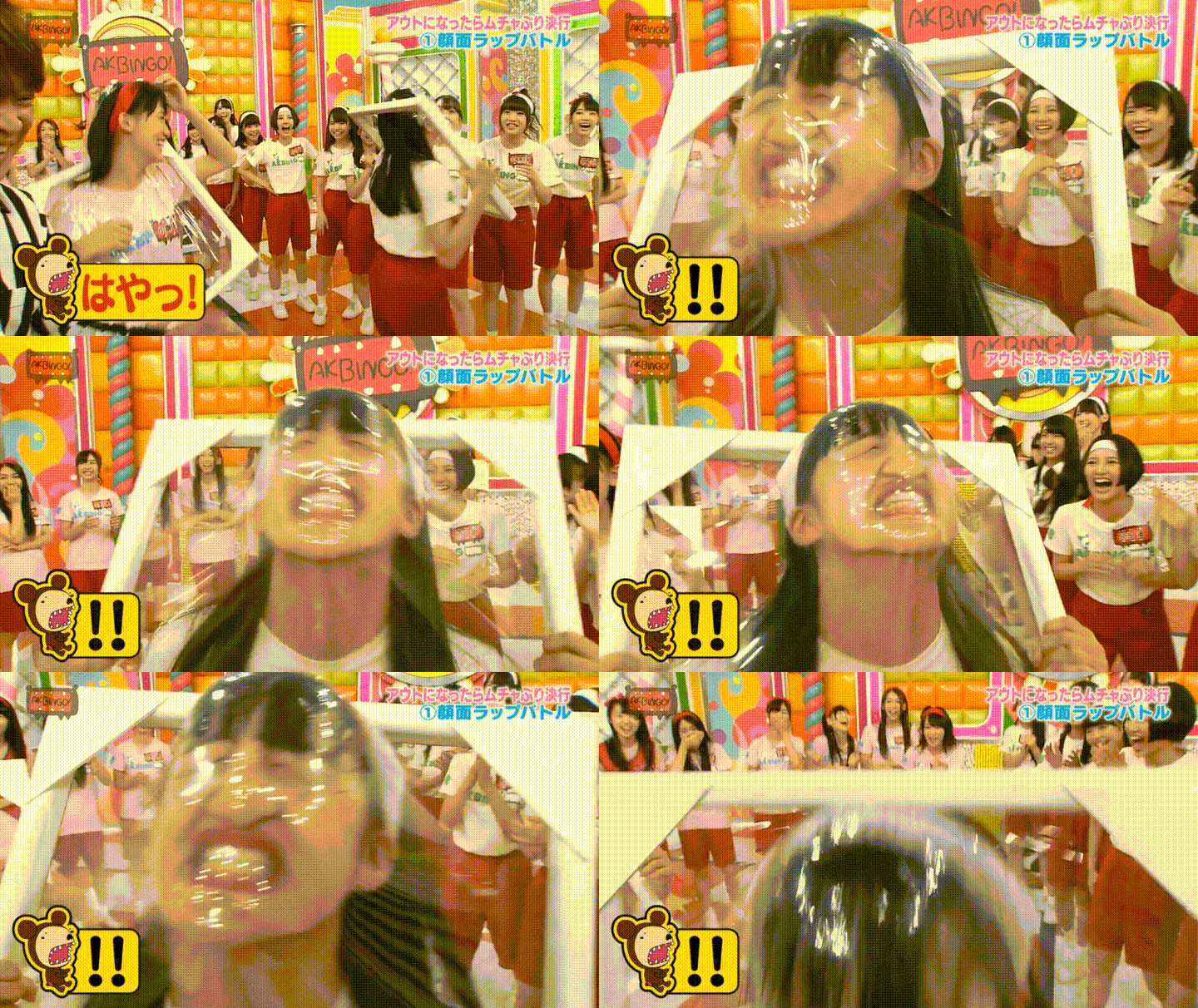
| AKBingo! | AKBINGO! | Idol-based show with word games and punishments; great for hearing female speech patterns |
Vocabulary List: Game Show and Humor Words
| Japanese | Kana | Romaji | Meaning |
|---|---|---|---|
| 罰ゲーム | ばつげーむ | batsu gēmu | Penalty game |
| 芸人 | げいにん | geinin | Comedian / performer |
| 大爆笑 | だいばくしょう | daibakushō | Big laughter / roar of laughter |
| 滑る | すべる | suberu | To flop (a joke) / to slip |
| 面白い | おもしろい | omoshiroi | Funny / interesting |
| 恥ずかしい | はずかしい | hazukashii | Embarrassing |
| ネタ | ねた | neta | Joke material / comedic act |
| 反応 | はんのう | hannō | Reaction / response |
| ツッコミ | つっこみ | tsukkomi | Straight man / retort role |
| ボケ | ぼけ | boke | Fool / person who makes the joke |
These words appear in subtitles, commentary, and host banter—so learning them boosts your comprehension and enjoyment.
Real-Life Phrases from Game Shows
1. Reacting to something unexpected
- 「マジで!?」 — Seriously!?
- 「うそ〜!」 — No way!
- 「やばいってこれ!」 — This is insane!
2. Friendly teasing and jokes
- 「お前、それはないわ〜!」 — Dude, that’s just wrong!
- 「滑ったな…」 — That flopped, huh?
3. Common host banter
- 「次の挑戦者はこちら!」 — Next challenger, come on down!
- 「それでは、スタート!」 — Let’s begin!
Learner Case Study: Mia & the “No Laughing” Challenge
Mia, an intermediate learner from Canada, used Gaki no Tsukai’s 24-hour “no laughing” challenges as her listening practice. She focused on:
- Recognizing reaction phrases
- Learning sentence-ending particles
- Following context through gestures and laughter
She even challenged herself to not laugh until she understood the joke—and surprisingly, she started picking up intonation and humor styles faster than with classroom materials.
Practice Exercises
Phrase Match
Match the Japanese phrase to its English meaning:
- 滑ったな〜
- 面白すぎる!
- 罰ゲーム
- ネタが古い
A. The joke’s too old
B. Too funny!
C. That joke flopped
D. Penalty game
Answers: 1C, 2B, 3D, 4A
Speaking Practice: React Like a Game Show Guest
Try these dramatic reactions out loud:
- ええええ!? (Ehhhhhh!?)
- ほんまかいな! (Kansai dialect: Are you serious!?)
- どういうこと!? (What does that mean!?)
Film yourself reacting while watching a funny clip—you’ll improve rhythm and fluency naturally.
5-Day “Laugh & Learn” Challenge
Day 1: Watch a 10-minute clip from Gaki no Tsukai with Japanese subtitles
Day 2: Write down 5 common reaction words and look up their meanings
Day 3: Mimic one reaction using your own voice and intonation
Day 4: Learn 3 words used in batsu games and use them in a sentence
Day 5: Record a short video pretending to host your own Japanese game show (even solo!)
Conclusion & Call to Action
Japanese game shows aren’t just wild fun—they’re windows into local humor, communication, and culture. Whether it’s a comedian yelling “マジかよ!” or an idol trying not to laugh during a batsu game, these shows reflect how Japanese people connect, tease, bond, and express themselves.
By diving into Japanese game shows and local humor, you’ll:
- Improve listening, rhythm, and everyday vocabulary
- Absorb humor styles and cultural nuance
- Gain the confidence to speak with emotion and spontaneity
What You Can Do Next:
- Start with a short clip and turn it into your listening practice
- Create a “reaction word” flashcard deck
- Try shadowing a comedian’s lines for speaking practice
- Join a Japanese TV study group online or with friends
Want to learn Japanese through culture-rich experiences? Contact our team(info@mynihongosensei.com) to explore study, internship, and homestay opportunities that immerse you in the language—from classrooms to karaoke to comedy clubs.
Disclaimer
This blog is for educational purposes. Japanese humor and media may include cultural references or jokes that vary in appropriateness or interpretation across audiences. Always approach with cultural sensitivity and verify your understanding with native speakers or language mentors.

