
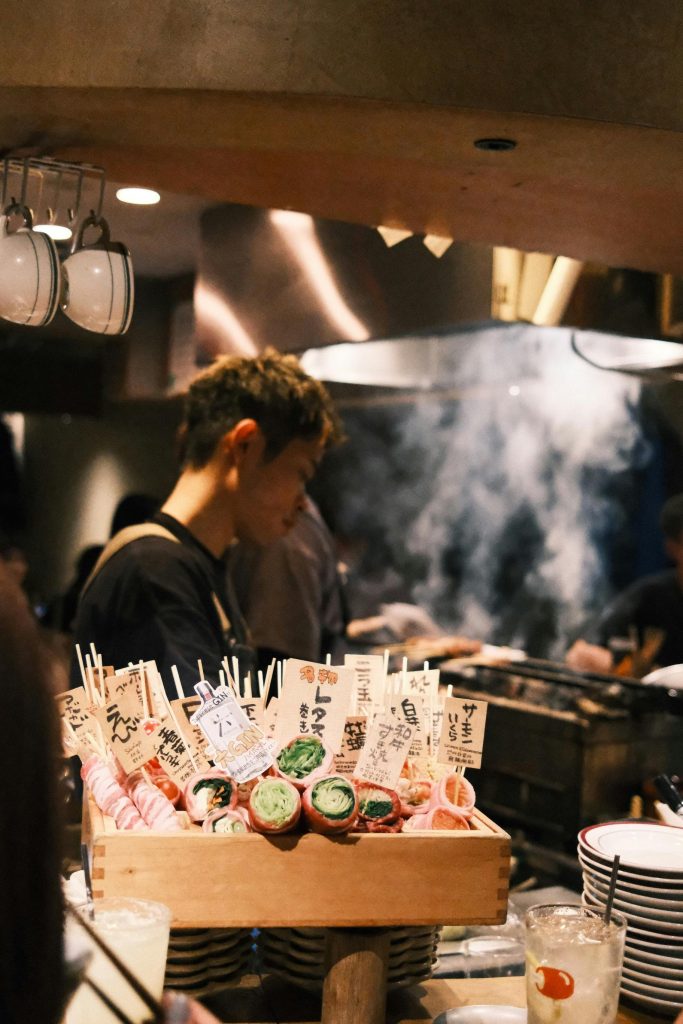
Exploring Japanese Street Food: Vocabulary and Must-Try Dishes
Walk down a narrow alleyway in Tokyo, Osaka, or Fukuoka, and your senses are immediately hit with sizzling sounds, savory smells, and cheerful voices calling out, “いらっしゃいませ!” (Irasshaimase!) — welcome!
Exploring Japanese street food is one of the most rewarding ways to connect with the language, people, and culture of Japan. It’s also an incredibly fun and tasty way to improve your Japanese vocabulary and comprehension.
In this article, you’ll learn how to confidently explore a yatai (屋台・やたい・food stall), order with ease, and enjoy authentic dishes—all while absorbing real Japanese in context.
Why Learn Japanese Through Street Food?
Street food is vibrant, accessible, and packed with learning opportunities.
- ✅ Real-life Japanese: Menus, signs, and conversations use casual, colloquial Japanese.
- ✅ Visual context: You can see what you’re ordering, which reinforces vocabulary.
- ✅ Cultural immersion: Every dish has a regional or seasonal story to tell.
- ✅ Low-pressure practice: Vendors are usually friendly and used to foreign customers.
Whether you’re walking through a matsuri (祭り・まつり・festival) or visiting a night market, these are chances to learn Japanese in the wild.
Key Vocabulary for Japanese Street Food Adventures
Here’s your essential Japanese street food phrasebook, complete with kanji, furigana, romaji, and definitions.
Common Food Items
| Japanese | Furigana | Romaji | Meaning |
|---|---|---|---|
| 屋台 | やたい | yatai | Street food stall |
| たこ焼き | – | takoyaki | Octopus balls |
| お好み焼き | おこのみやき | okonomiyaki | Savory pancake |
| 焼きそば | やきそば | yakisoba | Stir-fried noodles |
| 串カツ | くしかつ | kushikatsu | Deep-fried skewers |
| 焼き鳥 | やきとり | yakitori | Grilled chicken skewers |
| じゃがバター | – | jagabata | Buttered potato |
| 今川焼き | いまがわやき | imagawayaki | Sweet pancake with filling |
| 大判焼き | おおばんやき | ōbanyaki | Another name for imagawayaki |
| たい焼き | – | taiyaki | Fish-shaped pastry with filling |
Key Ingredients and Terms
| Japanese | Furigana | Romaji | Meaning |
|---|---|---|---|
| 具 | ぐ | gu | Filling, ingredient |
| ねぎ | – | negi | Green onion |
| マヨネーズ | – | mayonēzu | Mayonnaise |
| ソース | – | sōsu | Sauce (usually Worcestershire-style) |
| 紅しょうが | べにしょうが | benishōga | Red pickled ginger |
| 青のり | あおのり | aonori | Dried seaweed flakes |
| 鰹節 | かつおぶし | katsuobushi | Bonito flakes |
Useful Phrases for Ordering
| Japanese | Furigana | Romaji | Meaning |
|---|---|---|---|
| いらっしゃいませ! | – | irasshaimase! | Welcome! (used by vendors) |
| ○個ください。 | ○こください。 | ___ko kudasai. | I’d like ___ pieces, please. |
| これ、一つください。 | これ、ひとつください。 | Kore, hitotsu kudasai. | One of this, please. |
| 辛いですか? | からいですか? | Karai desu ka? | Is it spicy? |
| 持ち帰りできますか? | もちかえりできますか? | Mochikaeri dekimasu ka? | Can I take it to go? |
| おいしかったです! | – | Oishikatta desu! | It was delicious! |
Cultural Context & Regional Favorites
Each region in Japan boasts its own must-try specialties. Knowing where a dish comes from adds cultural depth to your language learning.
- Osaka – Takoyaki, Kushikatsu
- Hiroshima – Hiroshima-style Okonomiyaki (layered, not mixed!)
- Fukuoka – Mentaiko Yakisoba, Yatai stalls by the river
- Tokyo – Imagawayaki near shrines and markets
- Kyoto – Traditional sweets like Yatsuhashi and matcha mochi
Challenges to Watch Out For
Even advanced learners can feel nervous at fast-paced stalls.
- No English Menus – Street stalls rarely provide translations.
- Fast-talking Vendors – Listening can be tricky in noisy environments.
- Kanji-Only Signs – Sometimes without furigana.
Tips to overcome these:
- Watch YouTube videos of food vloggers in Japan.
- Practice sight-reading menus from Google Images or Tabelog.
- Prepare phrases in advance (and practice saying them confidently)!
Real-World Example Conversation
Let’s say you’re at a takoyaki stand in Osaka:
You:
これ、ひとつください。 (Kore, hitotsu kudasai.)
One of these, please.
Vendor:
はい、ありがとう!ソースとマヨネーズ、かけますか?
Hai, arigatō! Sōsu to mayonēzu, kakemasu ka?
Thanks! Do you want sauce and mayo?
You:
はい、お願いします。 (Hai, onegai shimasu.)
Yes, please.
Vendor:
はい、お待たせしました〜。
Hai, omatase shimashita~.
Thanks for waiting!
Practice Exercise
Translate these phrases into English and then say them aloud:
- 焼きそばを二つください。
- 持ち帰りにしたいです。
- おすすめは何ですか?
Challenge: Go on YouTube and find a video of a Japanese matsuri (festival). Watch 3 minutes and write down any food words or phrases you recognize!
Study Challenge: Create a Virtual Street Food Tour
- Pick 3 regions of Japan.
- Research one local street food from each.
- Write the name, ingredients, and how to order it in Japanese.
- Bonus: Draw or screenshot photos and label them with Japanese vocabulary!
Post your “tour” on Instagram, a language blog, or share with a language exchange partner!
Case Study: Emily’s Festival Language Journey
Emily, a beginner Japanese learner from Canada, visited Japan during summer and went to the famous Gion Matsuri in Kyoto. She wrote a list of 10 street food items and practiced ordering each one.
“I was nervous,” she says, “but every vendor smiled and helped me. By the third stall, I wasn’t even looking at my notes anymore!”
Emily’s love for Japanese street food became a launchpad for deeper study and cultural immersion.
Recommended Resources
- YouTube Channel: “Paolo fromTOKYO – Street Food”
- Web App: Tabelog – Search food stalls by city
- App: Google Lens – Translate menus live
- Book: Japanese for Travelers by Scott Rutherford – Useful for on-the-go learning
Final Takeaways
- Street food is a delicious and dynamic way to learn Japanese.
- Knowing vocabulary and key phrases builds confidence and cultural fluency.
- Use food experiences as language opportunities, not just meals.
Call to Action
Want to experience Japanese culture with all five senses?
Join our language coaching programs or contact us to explore short-term study, culinary tours, and work opportunities in Japan.
Your first takoyaki conversation could be the start of fluency!
Contact us now and take the first step toward living, learning, and tasting Japan.

